Patrick Gardella, our SVP of Technology, sat down with Authority Magazine to share his perspective on leading innovation and disruption at the C-suite level.
“I get stuff done. That’s been my motto for many years. I have no problems swimming against the current in the workplace. But I’m not a visionary. I’m not here to be disruptive for disruptions sake. I will use disruption and continuous learning to guide my next step. I want to use disruption to make things work better.”
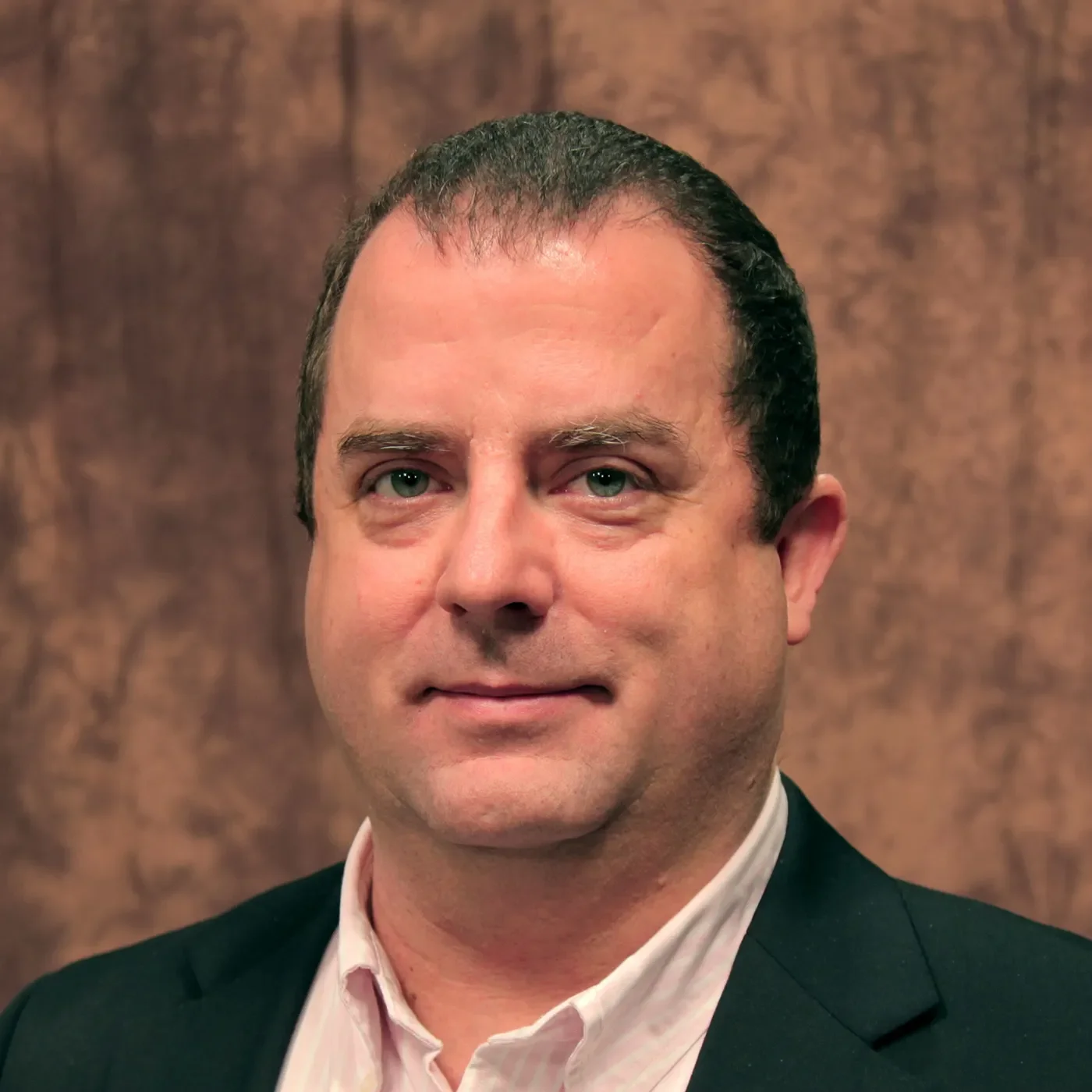
In an age where industries evolve at lightning speed, there exists a special breed of C-suite executives who are not just navigating the changes, but driving them. These are the pioneers who think outside the box, championing novel strategies that shatter the status quo and set new industry standards. Their approach fosters innovation, spurs growth, and leads to disruptive change that redefines their sectors. In this interview series, we are talking to disruptive C-suite executives to share their experiences, insights, and the secrets behind the innovative approaches they are taking to disrupt their industries. As part of this series, we had the pleasure of interviewing Patrick Gardella.
Patrick Gardella is Senior Vice President of Technology and Chief Technology Officer for Monstarlab Americas, where he leads engineering strategy and delivery across the region. With more than 25 years of experience in digital transformation, platform modernization, and AI-driven solutions, he helps advance Monstarlab’s mission to build modern digital experiences for global enterprise clients.
Thank you so much for joining us in this interview series. Before we dive into our discussion about disruption, our readers would love to “get to know you” a bit better. Can you share with us the backstory about what brought you to your specific career path?
Doyou remember the old Family Circus cartoons, where Billy takes a roundabout way of getting where he’s supposed to go? I sometimes feel like my career is like that.
For college, I was accepted into the United States Coast Guard Academy where I initially majored in Applied Science (meteorology, oceanography, etc.). But I ended up helping other people with their homework and projects and writing programs. So I switched my degree to Mathematical and Computer Sciences. Upon graduation, I went into the fleet and did work icebreaking in Alaska, Greenland, and Antarctica. When that tour was complete, I moved into law enforcement leading drug interdiction efforts in the Caribbean. While there, I wrote many programs to lay out search patterns for aircraft to follow.
When my required time of service was up, I went to graduate school. To pay the bills, I worked as Director of Web Development for a small consulting firm. And to make a long story short, I then proceeded to bounce back and forth between technology leadership roles (CIO, CTO, etc.) and hands on work (developer, sys admin, etc). I never want to lose touch with what we are actually doing in technology.
So no matter which direction I’ve tried to go, I always come back to technology and technology delivery. It’s one of my loves, and it gets me up every morning. I’m surrounded by half finished personal projects, with at least ten linux computers of different capabilities, architectures, and distributions. I have programs written in Rust, Python, JavaScript, C#, C++, and probably a few more in different stages of development.
Which is what brought me to my current role as SVP Technology, CTO of Monstarlab Americas. I could have stayed at my last role (Global SVP of Technology for Healthcare and Life Sciences at Globant) for many years. But at Monstarlab, I am closer to the actual work being done by the teams…
What do you think makes your company stand out? Can you share a story?
I believe what makes Monstarlab stand out is that we offer ‘Boutique Creativity at Global Scale.’
Unlike the massive consulting firms, we retain an agile, entrepreneurial spirit — we don’t just deliver slide decks or code; we build real, tangible digital products. But unlike small local agencies, we have the ‘Power of Borderless’ behind us. We can tap into a global network of thousands of experts to solve niche problems overnight.
We also don’t view Strategy, Design, and Engineering as separate departments. We blend them. We bring a consumer-grade user experience mindset to every project, whether we are building a customer-facing app for Shake Shack or a complex internal tool for a Life Sciences giant. We build technology that people actually want to use, not just technology they have to use.
Let me give you a few examples:
For a major player in the retail and convenience sector, Shake Shackk’s move into fresh, made-to-order food required a digital experience that was as seamless as their store concept. They knew that customer satisfaction would hinge on two things: an engaging, error-free ordering experience and rapid fulfillment.
We approached this with a true product mindset. Our team designed a custom kiosk experience focused on the user, allowing for limitless modifications for made-to-order sandwiches and salads, all while seamlessly integrating allergy information. This puts the user in complete control of their order, transforming a transactional process into a delightful, consumer-grade experience.
But the disruption wasn’t just on the customer side. In a demonstration of our Strategy-Led, Design-Focused, Tech-Enabled approach, we simultaneously developed a custom Kitchen Display System (KDS). This KDS acted as an intelligence layer, translating the complex, customized orders — including every modification and instruction — into a clear, immediate set of steps for the kitchen staff.
This system ensures that the business need of efficient order delivery (within minutes) is met with accuracy and consistency. It’s a perfect example of our model in action: we are augmenting the kitchen staff’s ability to execute complex orders faster and more accurately, not replacing them.
Or another case — For a global car rental company, headquartered in Europe but with strong expansion goals in the Americas, their leadership recognized a clear need to elevate their digital booking experience and future-proof their business.
Our initial engagement was a focused audit of their existing mobile app. We didn’t just look at the code; we approached it with a consumer-grade UX mindset, identifying immediate pain points and ‘quick wins’ that could be implemented swiftly to better showcase their full range of mobility offerings, including ride-hailing and car-sharing.
This led to a more strategic, long-term partnership where we operated as a true partner, augmenting their internal capabilities with our global scale. For nearly a year, our teams worked alongside their engineering and product counterparts in Germany and India. This ‘Power of Borderless’ allowed us to tackle the immense complexity of redefining their core digital booking experience across multiple international markets. It wasn’t just a design task; it was a blend of Strategy, Design, and Technology — our unique approach.
Just one more, I promise!
Monstarlab has created user-centric digital experiences for the world’s leading attractions, including Rockefeller Center’s Top of the Rock, Gardens by the Bay in Singapore, and the CN Tower in Toronto. Our philosophy is to build a digital companion that can “create a user experience that makes people want to visit the site.”
For Gardens by the Bay, this meant transforming their app into a holistic companion that solved real-world friction, introducing online ticketing and AR-based navigation to manage congestion and enhance the experience. Similarly, for the CN Tower, we redefined the on-site visit with an augmented reality-style mobile app that helps visitors from the observation deck identify landmarks. And for Top of the Rock, we crafted a comprehensive visitor experience app featuring Photosphere AR and Indoor Wayfinding, designed to enhance the entire journey for all visitors. By blending Strategy, Design, and Technology, we transform a transactional visit into an engaging, interactive moment that deepens the visitor’s connection to the destination.
You are a successful business leader. Which three character traits do you think were most instrumental to your success? Can you please share a story or example for each?
Curiosity, Communication Capabilities, and Compassion
I think Curiosity is the most important of the three. The great thing about technology is that it is always changing, and you constantly need to learn and grow. I always want to learn more and grow what I know. Until recently, my goal was to be able to do the things my teams could do (albeit slower and with more searching!). If they were developing in a new language, I would try to learn that language. If they used a new infrastructure technology, I would learn it too. If I was going to talk to our clients, I needed to know something about the technology we were using. And not just marketing, but actual hands on work. When Terraform came out, I immediately started trying to use it — and as a result, I had much better appreciation about the capabilities and limits of that platform. (And I’m still learning it!)
Communications capabilities comes in second. When I joined my last company, I would often say “I am not a salesperson” by which I meant, “I can’t sell.” I can do the work, but don’t ask me to try to convince a client to buy something. Yet I became convinced that I could sell — just not using the traditional sales techniques. If I could explain something to a client and help them to see how the solution I was, well, selling, would solve their business needs, that they would buy it. One time, for a bank, we were presenting a proposal for rebuilding their public website. Our competitor bid something like $500K and our bid was $2.5MM. The client (rightly!) asked, what makes your solution five times better than the other one? So I told him and gave him examples. The end result was that they selected us.
Finally, Compassion. This one always catches people by surprise. It’s not one of the items on most tech manifestos. But it should be. No matter what size team you have, your people will be going through something in their personal lives. Years ago, we were trying to launch a new commercial product for our company. We had firm deadlines, and marketing had already scheduled the advertising. Yet at the same time, one of the people on the team was going through a divorce. Another was having heart problems. And a third was going through fertility treatments. We had to deliver. So I let those people take the time they needed for their personal lives, and asked the others to pick up the slack where they could. In the end, those people who took time off got as much done as those who were working — they were just more efficient with their time. I could have been hard hearted and ignored their personal challenges; but I didn’t. And we launched the product on time, to great success.
Leadership often entails making difficult decisions or hard choices between two apparently good paths. Can you share a story with us about a hard decision or choice you had to make as a leader? I’m curious to understand how these challenges have shaped your leadership.
Some of the hardest decisions a leader has to make is when to let someone go from a company. There is one person I knew many years ago who did great work on the technology that she knew. But she made it clear that she had no interest in learning anything new. She was good at what she did, and didn’t think she needed to grow. I worked with her, even put her on a performance improvement program, and offered her ways and time to learn new things. When she continued to say no, I had to let her go. It was heart breaking, but necessary for both her and us. She’s had a good career since then, so she must have learned. (No one is still using Java Server Pages 0.9.2 anymore — I hope!)
Since then, I have had to make decisions about other people, too. Both through downsizing and due to performance. It never gets any easier, but I have learned it is necessary sometimes — both to the business and to the individual. And I will do whatever I can to get the person a new role or help them to grow.
Ok, thank you for that. Let’s now jump to the primary focus of our interview. Let’s begin with a basic definition so that all of us are on the same page. In the context of a business, what exactly is “Disruption”?
Disruption is the inbreaking of something new which challenges the status quo.
How do you perceive the role of ‘disruption’ within your industry, and how have you personally embraced it? Is it a necessity, a strategy, or something else entirely in your view?
In the technology world, disruption is the status quo. Back when I started, one of the common interview questions was “where do you see yourself in five years?”. I’ve not heard that much in more recent times. Because things change so often. I don’t even like setting goals on my annual or semi-annual performance reports — what we were thinking we would do six months ago is no longer applicable.
There is always room in the marketplace for leaders and laggards. Especially the latter. If there weren’t, we wouldn’t still be talking about COBOL or RPG modernization. But that isn’t what drives me — I am constantly learning, and trying to figure out how to make things better or faster. So, to me, it must be a strategy — look at what is leading edge; try it; experiment with it; and then accept what is best for what you need at the moment. Lather, rinse, repeat.
What lessons have you learned from challenging conventional wisdom, and how have those lessons shaped your leadership style?
In my field, there are often two sets of “conventional wisdom”. The one is the tried and true way of doing things. The second is “the latest is the best”. The key to leadership is knowing which one you should listen to at any given moment.
For a while, DevOps, DevSecOps, and Shift Left were the cutting edge. I had seen what happens when you follow the more traditional separation of duties and when you put off testing until the end of coding. So I have challenged the status quo and encouraged or even forced my people to use those cutting edge tools and platforms. And things turned out to be better for doing so — we could deploy faster, test more, and deliver a higher quality product.
On the other hand, the “conventional wisdom” of you must do what is cutting edge or you will be left behind. For a while everything was blockchain this, or distributed ledger that. People built things on blockchain that had no business being there. (I’ve built things on blockchain which had no business being there!) Or take where we are now — the cutting edge of generative AI and vibe coding. Everyone wants to do AI,and my clients have spent hundreds of millions of dollars on it. Yet very few actually could show ROI or even business value.
So I tend to place myself on the line between early adopted and early majority. I want to try the latest thing, as I said earlier — so I can confidently speak about it, and have answers for why it is that I don’t want to use that latest thing. Occasionally though, it is the other way around.
Disruptive ideas often meet resistance. Could you describe a time when you faced significant pushback for a disruptive idea? How did you navigate the opposition, and what advice would you give to others in a similar situation?
Many years ago, I worked for Discovery Communications. We had years and years of video content, both A roll and B roll footage, but no way to find it. Unless someone remembered it, or found it by watching the content, it was effectively not there. So a friend of mine asked me to help him create a system where we could uniquely identify each piece of content, where it was taken from, and to create metadata for it, which would be as detailed as we could make it. We got a lot of pushback on this idea. No one wanted to fund it; but they saw the value.
I was part of many meetings and discussions on the topic. I remember one very clearly. We were meeting with a few people and a man I had never seen before came in and sat down. He listened carefully, but didn’t say anything, until he finally asked — What are you going to do if this isn’t funded? I turned to him and said — “that’s not really a choice; we have to do this. I don’t care what anyone says. If it’s not funded, then we’ll do it ourselves and ask people to put in time as they can to create it. We’ll make it happen.” He got up and walked out. I later found out that he was the new CIO of Discovery in his first week on the job. And the project got funded.
I’m not sure I would recommend to anyone to tell the CIO that they didn’t care what they thought. That’s not typically a career enhancing move. But occasionally, that may be what is necessary to make things happen. Sometimes the passion to do things right, to do things better, will prevail.
Ok super. Here is the main question of our interview. What are your “Five Innovative Approaches We Are Using To Disrupt Our Industry”? If you can, please share a story or an example for each.
You’re going to hear some of the things I said earlier about what makes Monstarlab unique — because these are the things which we expect will disrupt the industry.
1. “The Centaur: AI Augmentation”
As I read about the new trends in generative AI (as opposed to more traditional AI), I hear all about vibe coding and agentic mesh on one side, and on the other security and regulations on the other. I have seen many clients who spend millions of dollars on AI solutions which are intended to be a “silver bullet” which will solve their problems. I think we’re missing the point (of the market today — it may change tomorrow!).
Not long ago I read an article on what the author refers to as Human-Algorithm Centaurs (link). I think the authors are spot on. For the non-Harry Potter readers, the centaur is a mythical creature which is half human and half horse. In other words, you have the intelligence of a human and the stamina and strength of a horse. Which is a great model. Rather than try to get the AI (the horse) to replace the human, why not have the AI augment the human.
Developers have been doing this for a while; having AI write unit tests, documentation, etc. But taking it to the next step, allow your engineers to design the logic and data flows, and let AI review it. Then create a development plan for how you will go about architecting the solution. Define the technical underpinnings and requirements. And only then do you have the AI take over and do its magic. Nearly all of the modern IDEs have this capability, but I’ve seen very few people make full use of this. Let alone the others in the product development team. Following this paradigm, we are able to complete work faster, which is not spaghetti or disposable code, and create better documentation and artifacts in the process. This is what will disrupt the technology world. Not the silver bullets. (again — that may change next week.)
2. “Product mindset leads the way”
Innovators in the marketplace need to think like the best Product Managers. They are always asking “What do our users want?” and “What do they need?” In my last role, I led the Healthcare and Life Sciences Studio for a large consulting firm. In that work, I looked at a lot of Electronic Health Record (EHR) platforms which are on the market. Some, like Epic, have this product mindset, and are always innovating to give healthcare professionals and patients what they need and to create a product which is easy to use. And I’ve seen others, who shall remain unnamed, who build EHRs because someone said they needed one. They are almost useless, but the users have to use them.
3. “Business Needs as our North Star”
This is a clear extension of my first answer. When I talked about generative AI earlier, I said that many people adopted it because it was new and cool, not because it was driving any business need. If we are going to do work, we want it to solve a business problem. I mean I won’t turn down a project that doesn’t, but I will be constantly asking and framing the conversation around business needs.
4. “Strategy-Led, Design-Focused, Tech-Enabled”
Many firms do just one of these well. Management consultancies do strategy but don’t build. Smaller agencies have the creativity, but not the build capabilities. Dev shops build but don’t think strategically. We believe all three are needed to create solutions which the customer will want to use, and which will meet a business need. We challenge our clients to think about their strategy and design, and then we build it.
5. “Boutique Soul, Global Scale”
I’ve seen too many companies sell the “A Team” only to have them replaced with the “C Team” or even the “D Team” in a few weeks or months. We refuse to do that. With Monstarlab, you get the personalized care, agility, and design-focus of a small studio, but backed by thousands of engineers globally. I want the quality of the work to show in all we do.
As I said before, the ability to create software which solves a business need, which people want to use, and doing so faster than anyone else is what will disrupt the industry in a tangible, enduring way.
Looking back at your career, in what ways has being disruptive defined or redefined your path? What surprises have you encountered along the way?
I get stuff done. That’s been my motto for many years. I have no problems swimming against the current in the workplace. But I’m not a visionary. I’m not here to be disruptive for disruptions sake. I will use disruption and continuous learning to guide my next step. I want to use disruption to make things work better.
As I look back over my career, I will occasionally consider the roles that I did not take. I don’t regret any of them. Some were too cutting edge, too disruptive, and I didn’t see how they would survive. Most, as you might guess, were startups. Sure I’d get paid a lot, but that’s not the only thing driving me. Others were not disruptive enough. I got the sense that they were going to continue to shrink and lose significance in the marketplace. There too, I could have made good money and had a long career there, but I would have been bored.
This is the main reason I got back into consulting ten years ago — so I could help companies disrupt what they do, and make them better.
What surprises me is how many people get caught up in the bleeding edge. And on the opposite side of things, how many people don’t disrupt their work enough. Finding the right amount of disruption is what has enabled me to have the career I have created.
Beyond professional accomplishments, how has embracing disruption affected you on a personal level?
I am the cook of the house, and always have been. Wherever possible (when I’m not travelling, on a work call, etc), I will cook meals for my family and on occasions friends. What I look forward to for holidays is spending time in the kitchen. I guess you could say it’s my love language.
Whenever I try a new recipe, I will make it exactly as it is written. But as soon as the meal is done, I start writing notes on it — add more thyme, too much water, this needs an umami kick, so let’s add mushrooms (just don’t ask me to eat them — yuk!). And every time after, I do the same — try this? How did it turn out? Try something else… until i have the recipe which is perfect for my family’s taste profiles — what they love.
My daughter laughs at me every Thanksgiving, because one of our favorite recipes — for creamed corn — is essentially a piece of paper with a lot of scribbles. The original recipe is marked up and altered. Then it is completely crossed out, with another recipe written under it, which is also crossed out with a third recipe in the bottom right corner with just the ingredients. No instructions. I could just rewrite it, but that’s not fun. The fun is the joy it brings.
Small gradual changes that lead to a fantastic outcome is what drives me.
In your role as a leader, driving innovation and embracing disruption, what thoughts or concerns keep you awake at night? How do these reflections guide your decisions and leadership?
The main thing which keeps me up at night is finding the people who are willing to join me on the journey. The people who are curious, can see the vision, and embrace it themselves. That is part of the reason I changed positions recently — to go to a place where I could make this happen. And where the people were already on the path. Many people wouldn’t want to do what is necessary to share my vision. And that’s OK — there are a lot of places where people can continue to do what they’ve always done and have a good long career. Those willing to disrupt the way we’ve always done things, without promising quick fixes, are rare. I’ve found a place at Monstarlab that has many of those hardworking, rare people, and I’m always looking for more.
You are a person of great influence. If you could start a movement that would bring the most amount of good to the most amount of people, what would that be? You never know what your idea can trigger. :-)
This may surprise you, but I’ve been doing that for many years now. I am an ordained Anglican Priest, which is my passion and my mission. The Christian faith throughout the centuries has done great good for all of humanity, both in the church and outside. We’ve had many bumps along the road, but that is expected. But this is what drives me and shapes me as a leader: to live out the Gospel in its fullness.
So what that means to me in the business world is to approach each person as someone who is created in the image of God and therefore of immense worth. Regardless of their seniority or position. It means living a life of integrity, and therefore not shading the truth to win a deal. It means finding ways to bring peace to conflicts at work. And it means being meek, in the full Biblical sense. And yes, talking about my faith when the time is right.
You want to do the most amount of good to the most amount of people? Do the right thing for the right reasons. Treat everyone equally with respect. And be honest, forthright, and caring. Not just voice them as leadership traits and corporate culture, but live them out in our daily lives. Now that’s disruption.
How can our readers further follow your work online?
Readers can visit the Monstarlab website and/or connect via LinkedIn.
Thank you for the time you spent sharing these fantastic insights. We wish you only continued success in your great work!