Payment failures aren't just inconvenient, they're expensive. Every declined transaction represents lost revenue, every payment outage damages customer trust, and every security breach threatens your entire business. While most companies accept these risks as inherent to digital payments, modern payment orchestration transforms them from existential threats into manageable challenges.
Payment orchestration goes beyond simple payment processing by intelligently routing transactions across multiple processors, optimizing for success rates, costs, and risk mitigation. Here are three critical ways this approach protects your business from payment-related disasters.
1. Redundancy That Actually Works When You Need It
Having a backup payment processor sounds smart in theory. In practice, most backup implementations fail when they're needed most. The backup processor hasn't been tested with production traffic. The failover logic doesn't account for partial outages. The reconciliation systems can't handle transactions split across providers.
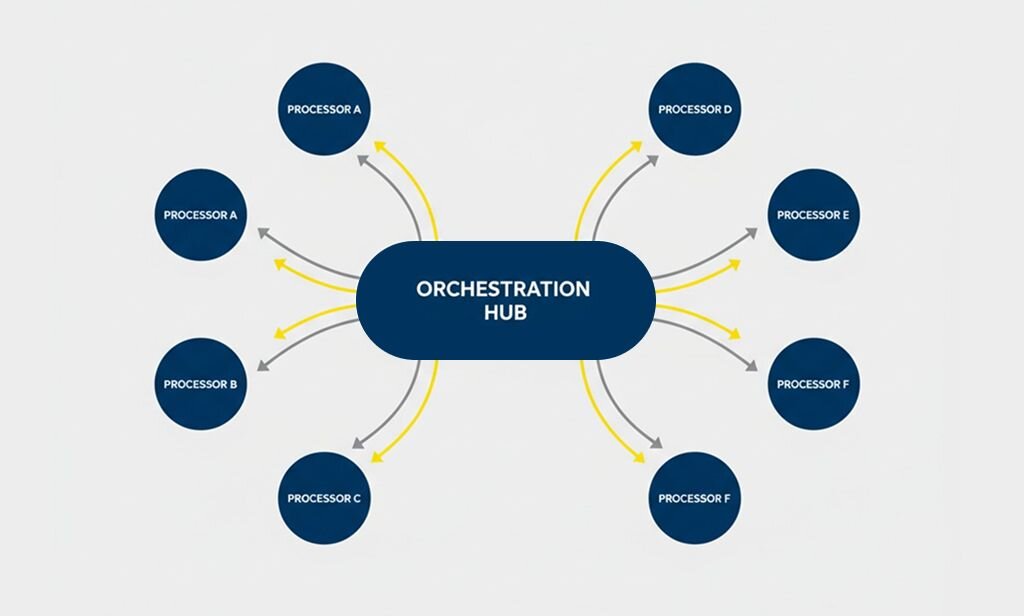
Modern payment orchestration builds true redundancy through active-active configurations. Instead of a dusty backup that might work, you're continuously processing transactions across multiple providers. This live traffic ensures every pathway remains tested, documented, and optimized.
The sophisticated routing logic handles various failure scenarios:
- Complete processor outages trigger immediate rerouting
- Degraded performance shifts traffic gradually to maintain stability
- Regional issues route transactions through unaffected gateways
- Specific payment method failures fall back to alternative processors
This isn't just disaster insurance—it's operational resilience. When one major processor experienced a three-hour outage last year, orchestrated merchants maintained 97% payment success rates while single-processor merchants lost millions in revenue.
2. Smart Routing That Maximizes Authorization Rates
Not all payment processors perform equally for every transaction type. One might excel at European debit cards while another optimizes for high-value B2B transactions. These performance differences—sometimes exceeding 5-10% in authorization rates—directly impact revenue.
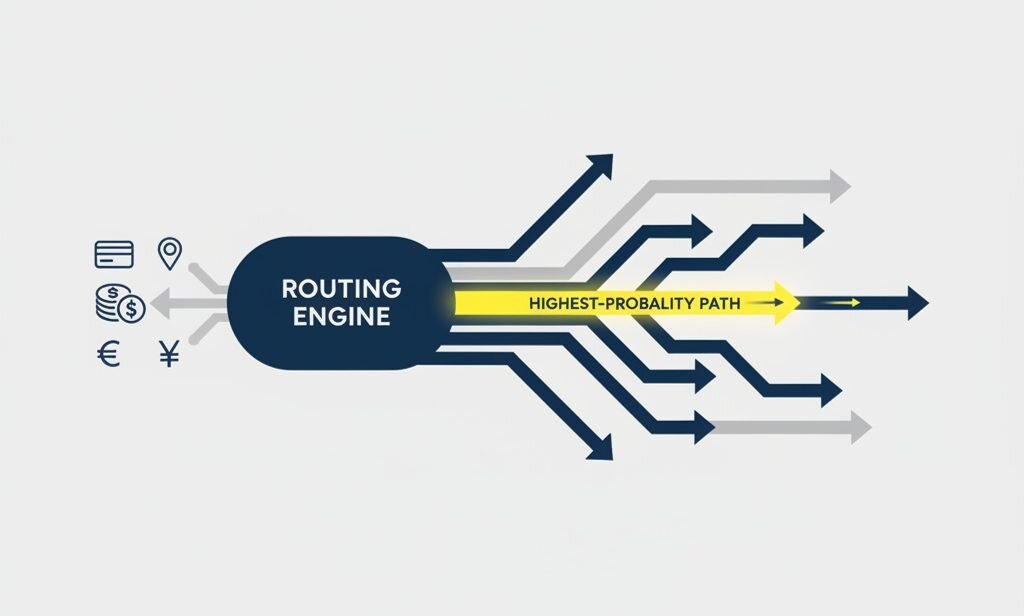
Payment orchestration leverages machine learning to route each transaction to its highest-probability pathway. The routing engine considers multiple factors:
- Historical success rates by card type and processor
- Transaction amount and risk profile
- Geographic location and currency
- Time of day and processor load
- Cost optimization within acceptable risk parameters
The impact compounds quickly. A 3% improvement in authorization rates for a business processing $10 million annually means $300,000 in recovered revenue. But the real value isn't just the aggregate improvement—it's the ability to capture edge cases that would otherwise fail.
Smart routing also enables strategic processor selection. Route high-value transactions through processors with better fraud tools. Send recurring payments through processors optimized for subscription billing. Direct international payments through providers with local acquiring capabilities. Each decision improves success rates while reducing costs.
3. Unified Fraud Prevention Across Multiple Channels
Fraud prevention becomes exponentially more complex when transactions flow through multiple processors. Different fraud signals, risk scores, and rules engines create blind spots that sophisticated fraudsters exploit. What looks like normal behavior to individual processors might reveal obvious fraud patterns when viewed holistically.

Modern orchestration platforms solve this by creating a unified fraud layer above individual processors. Every transaction, regardless of pathway, gets evaluated against comprehensive behavioral patterns. This centralized intelligence enables:
- Consistent fraud rules across all payment channels
- Cross-processor velocity checking and pattern matching
- Unified device fingerprinting and user behavior analysis
- Coordinated responses to emerging fraud trends
- Single dashboard for fraud monitoring and investigation
The orchestration layer can also leverage multiple processors' fraud tools simultaneously, combining their strengths while compensating for individual weaknesses. If one processor's fraud detection is particularly strong for specific threat types, route suspicious transactions through that pathway for enhanced screening.
This unified approach reduces both fraud losses and false positives. Legitimate customers experience fewer incorrect declines, while fraudsters can't exploit gaps between different processors' detection capabilities.
The Risk Reduction Multiplier
These three risk mitigation strategies—redundancy, smart routing, and unified fraud prevention—work together multiplicatively. Redundancy ensures you're always processing. Smart routing maximizes success rates when you are processing. Unified fraud prevention protects the transactions that succeed.
The combination creates resilience that no single processor can match. System failures become inconveniences rather than catastrophes. Authorization rates improve continuously through machine learning. Fraud patterns that would slip through individual processors get caught by unified intelligence.
For growing businesses, payment orchestration transforms payment processing from a single point of failure into a strategic advantage. The question isn't whether you'll face payment disruptions, declining authorization rates, or sophisticated fraud attempts—it's whether your infrastructure is prepared to handle them.
If you're interested in exploring payment orchestration for your business, we can help design and implement a solution that reduces risk while improving performance. Our team has built orchestration layers across multiple processors and understands the complexities of creating truly resilient payment infrastructure. Reach out to discuss how orchestration could strengthen your payment strategy.