Modern web applications are no longer limited to a single website experience. Companies today publish content across websites, mobile applications, customer portals, digital kiosks, and third-party integrations. As these digital experiences continue to grow, many development teams eventually encounter limitations with traditional content management systems.
Development teams working on CMS-heavy applications often encounter situations where frontend updates are tightly coupled with backend template changes. Even minor UI adjustments may require coordination among developers, QA teams, and content editors before deployment. As content requirements expand across multiple pages, platforms, and devices, maintaining these systems becomes increasingly complex.
This is one of the primary reasons why many companies are now exploring headless CMS architecture.
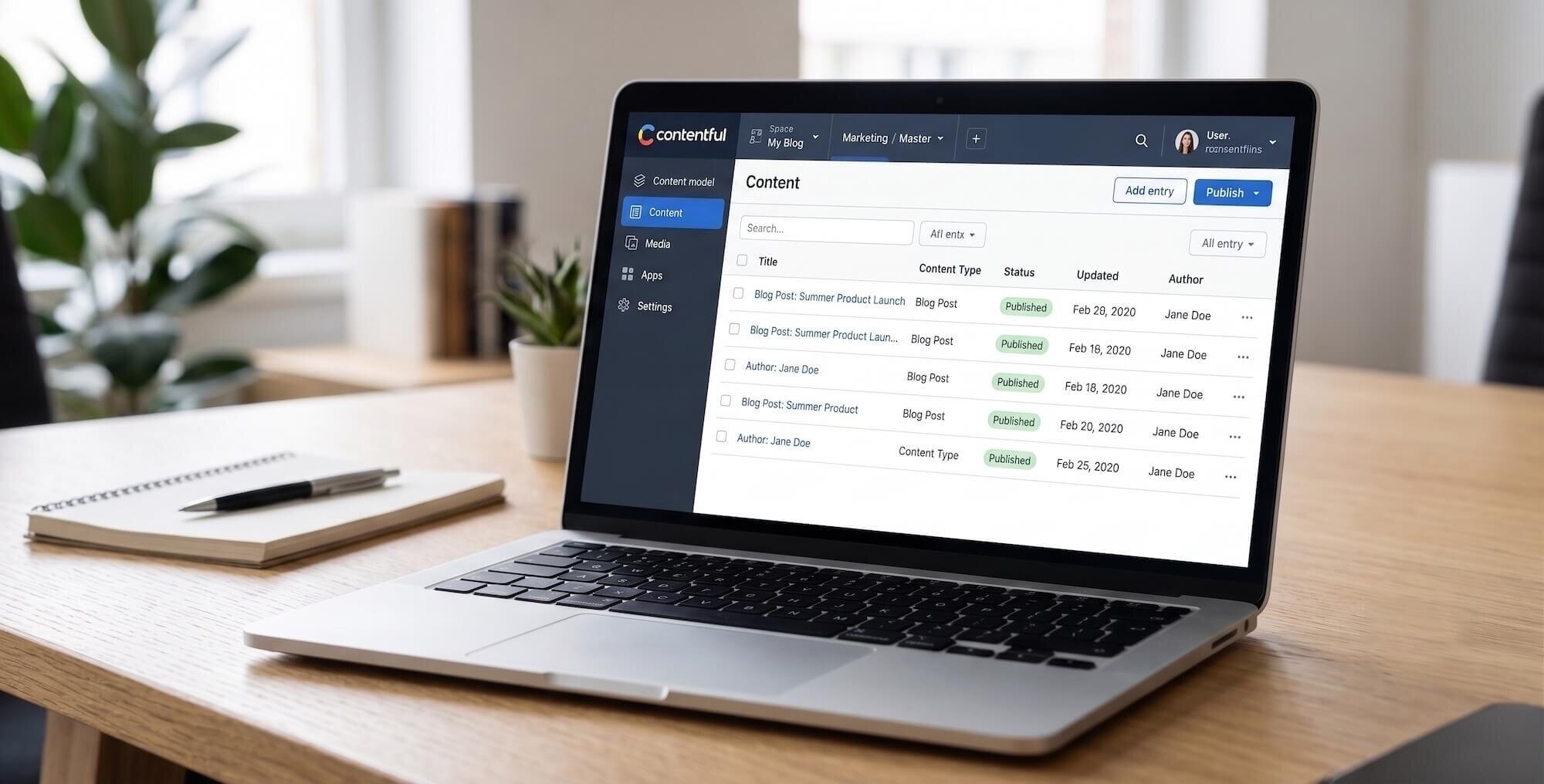
This shift is also reflected in industry research. According to Contentful's Digital Innovation Gap report, 70% of organizations reported that their software ecosystems are becoming more complex and require API-first platforms that integrate easily with other systems. However, only 36% of respondents said they were already using API-first solutions, highlighting a significant opportunity for organizations to modernize their content infrastructure.
The broader web ecosystem also points to this trend. In its 2024 CMS chapter, the Web Almanac notes that the growing separation of content management from frontend presentation is a potentially correlated factor behind recent shifts in CMS usage date, reflecting the extent to which headless architecture is becoming part of how organizations approach modern web and omnichannel experiences.
Rather than treating content management and frontend rendering as a single system, a headless CMS separates them entirely. Content becomes centrally managed and delivered through APIs, while frontend applications are built independently using modern frameworks such as Vue.js, React, Next.js, or Nuxt.
Platforms such as Contentful, Strapi, Sanity, and Storyblok have become increasingly popular because they support this modern API-first approach.
This article explores what a headless CMS is, why companies are moving toward this architecture, and the practical considerations development teams typically encounter along the way.
Understanding What a Headless CMS Really Means
A headless CMS is a content management system that focuses only on storing and delivering content. Unlike traditional CMS platforms, it does not control how the frontend is rendered.
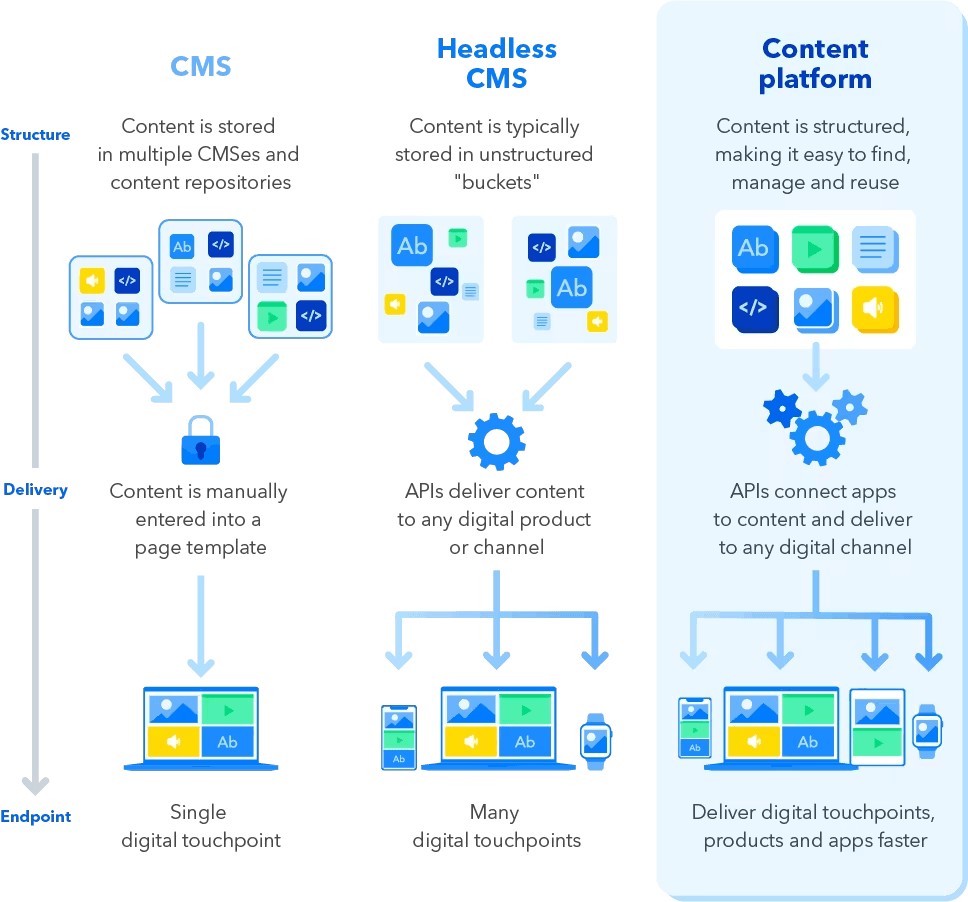
Figure 1. An infographic comparing the evolution of content management systems—from traditional CMS to headless CMS and modern content platforms—highlighting how APIs enable faster, multi-channel digital content delivery. (Illustration Source: Contentful)
In traditional systems like WordPress or Drupal, the backend and frontend are usually tightly connected. Content management, templates, frontend rendering, plugins, and backend logic often live inside a single application. This setup works well for simple websites, but it becomes harder to scale when content must be reused across multiple platforms.
A headless CMS changes this workflow completely. Instead of rendering webpages directly, the CMS exposes content through APIs such as REST or GraphQL. Frontend applications then consume that content independently.
In practice, this means the same content can appear across multiple platforms at the same time. A single article, event description, or product announcement may be displayed differently on a website, mobile application, or customer portal while still being managed from one centralized source.
This separation between content management and presentation is the core idea behind headless architecture.
Why Traditional CMS Platforms Become Difficult to Scale
A common challenge observed in many CMS-based projects is that frontend customization becomes increasingly difficult as systems grow.
For example, in projects involving dynamic marketing pages or event-related content, reusable content structures become important very quickly. When content editors frequently request layout adjustments, tightly coupled CMS templates can slow down development workflows. Frontend redesigns often require backend template modifications, and content reuse across platforms becomes harder over time.
This becomes even more noticeable when companies expand into mobile applications, multilingual websites, customer portals, or omnichannel experiences. As the number of digital touchpoints increases, maintaining content from a monolithic CMS architecture starts becoming inefficient.
In many organizations, content updates that should take only a few minutes can instead require deployment coordination among frontend developers, backend developers, and QA teams. While this may be manageable for small websites, it creates bottlenecks for larger applications that require frequent updates across multiple platforms.
This is where headless CMS architecture becomes an attractive alternative.
The Business Case for Going Headless
Flexibility is one of the defining characteristics of headless CMS architecture. Because frontend applications are separated from content management, developers and content editors can work independently from each other.
Frontend teams can focus on user experience, performance optimization, and modern frameworks, while editorial teams continue publishing content without waiting for frontend deployments. This separation reduces bottlenecks and improves collaboration across teams.
The increasing demand for omnichannel content delivery is another factor driving adoption. Modern businesses rarely publish content to only one website anymore. The same content often needs to appear across websites, mobile apps, email campaigns, and internal systems simultaneously.
With API-driven content delivery, organizations can reuse structured content across multiple platforms instead of recreating the same information repeatedly. This not only improves consistency but also makes long-term content management easier.
In many cases, companies also benefit from being able to redesign frontend applications independently without restructuring the CMS backend entirely.
Traditional CMS vs Headless CMS
Before choosing a CMS architecture, it is important to understand how development workflows differ between traditional and headless systems.
The biggest difference is not only technical architecture, but also how teams manage scalability, content reuse, and frontend flexibility as applications grow.
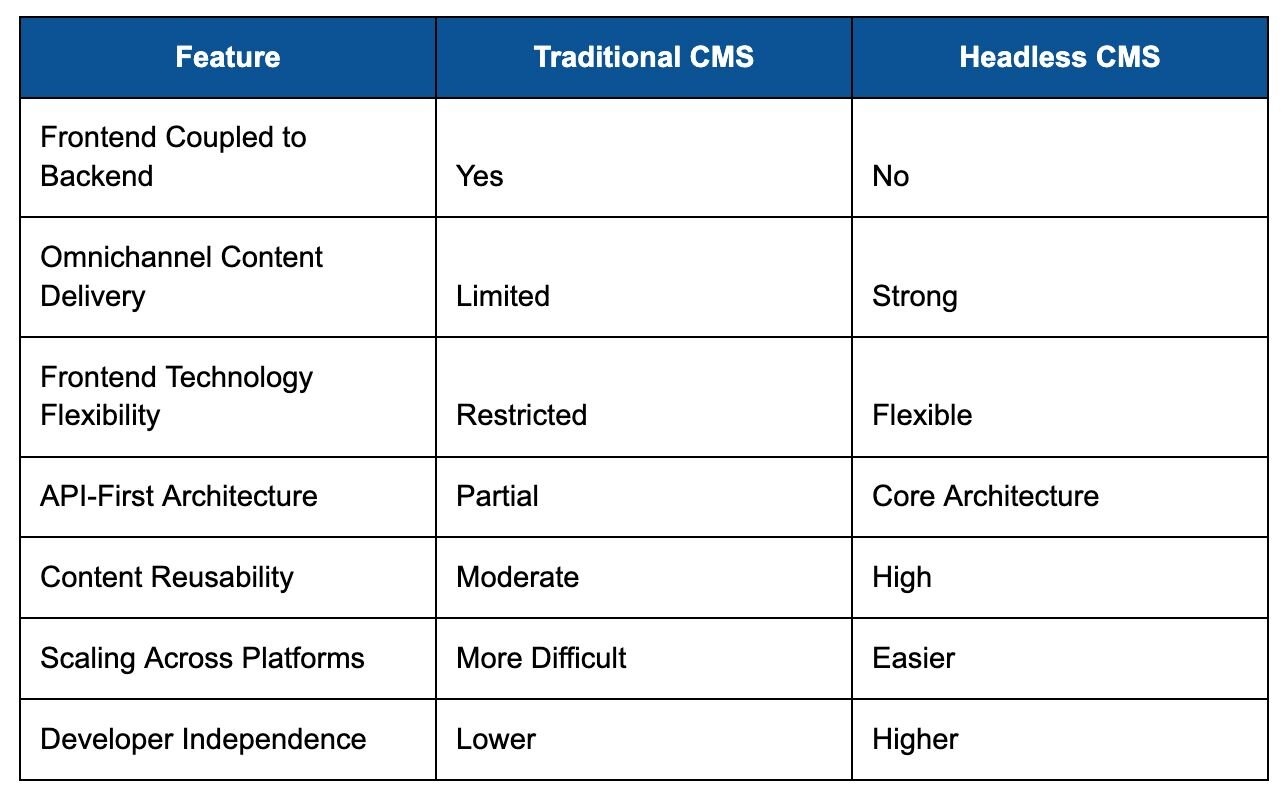
In actual implementation, these differences become more noticeable once projects expand beyond a simple website. Headless architecture tends to benefit organizations that support multiple frontend experiences or require faster frontend iteration cycles.
This does not automatically mean headless CMS is always the better solution. Smaller websites may still benefit from traditional CMS platforms because they are often easier to set up and maintain. The right architecture ultimately depends on business requirements, team structure, and long-term scalability goals.
Technical Advantages of Headless CMS
Front-end performance and deployment flexibility represent an area where headless architecture becomes particularly valuable.
Modern frontend frameworks such as Next.js and Nuxt support rendering strategies like static site generation (SSG), server-side rendering (SSR), incremental static regeneration, and CDN-based caching. These approaches can improve performance by pre-rendering pages ahead of time, reducing backend rendering overhead, and caching content closer to users.
In content-heavy applications, separating the frontend from the CMS also simplifies deployment workflows. Frontend applications and CMS infrastructure can evolve independently instead of being tightly bundled together.
Structured content modeling also plays an important role. Instead of storing content as large blocks of HTML, headless CMS platforms encourage reusable content structures. Event data, SEO metadata, speaker profiles, product information, and promotional banners can all be managed independently and reused across multiple platforms.
As applications grow, this approach becomes significantly easier to maintain.
Real-World Scenarios Where Headless CMS Makes Sense
As content complexity increases, headless CMS architecture provides greater value to development teams.
In event-oriented platforms, for example, promotional content often needs to appear across different sections of the system. Event descriptions, banners, schedules, and announcements may require frequent updates while remaining consistent across desktop and mobile views. A centralized API-driven content system can simplify these workflows considerably.
Another common use case is multilingual websites. Managing translations directly inside traditional CMS templates can become difficult over time, especially when content expands rapidly. Headless CMS platforms typically provide localization support that allows teams to manage multilingual content more cleanly.
For frontend-heavy applications built with frameworks like Vue.js or React, headless architecture also aligns naturally with modern deployment pipelines and component-based development.
Where Headless CMS Falls Short
Despite its advantages, headless CMS architecture is not automatically the best solution for every project.
Traditional CMS platforms often provide themes, plugins, page builders, and rendering systems out of the box. With a headless CMS, development teams usually need to build the frontend separately, which requires stronger frontend engineering knowledge and API integration experience.
Preview workflows can also become more complicated because content editors may expect real-time previews similar to what traditional CMS platforms provide.
Infrastructure planning is another important consideration. Teams must think about frontend hosting, API caching, deployment pipelines, authentication, and CDN strategies. For smaller projects, these additional layers may introduce unnecessary complexity rather than solving real business problems.
For this reason, the choice between traditional and headless CMS should always be based on actual project requirements rather than trends alone.
Is Headless CMS Right for Your Business?
The growing adoption of headless CMS architecture reflects how modern digital platforms are evolving. As companies expand across websites, mobile applications, and multiple digital channels, traditional monolithic CMS systems can become limiting.
Headless CMS platforms offer a different approach by separating content management from frontend presentation. This creates greater flexibility for developers, better content reuse across platforms, and more scalable frontend architectures.
The right answer depends on how a team is structured and where it is headed. Headless architecture tends to be a strong fit if the organization publishes content across multiple platforms, expects to redesign its frontend independently of its CMS, or has the frontend engineering capacity to build and maintain a custom presentation layer. It may be less necessary if the business runs a single website with straightforward content needs, since a traditional CMS can often meet those requirements with less infrastructure overhead.
Beyond performance improvements and modern architectural trends, the greatest value of headless CMS lies in its ability to help organizations scale content operations efficiently as applications and digital ecosystems become more complex. For teams building modern multi-platform experiences, that flexibility is becoming increasingly important.
—
About Monstarlab Philippines
Monstarlab Philippines helps organizations plan and build modern, scalable digital platforms tailored to their content and business needs. Companies exploring whether a headless CMS is the right fit for their next project are welcome to get in touch to discuss their requirements with the team.
—
Author: Michael Felisco, Full-Stack Developer at Monstarlab Philippines
—
References: