In modern software development, artificial intelligence (AI) is now capable of generating APIs, database migrations, ORM models, repository classes, and even entire backend services within seconds. Development cycles have become significantly faster compared to previous years, allowing teams to deliver features at a much higher pace.
However, while AI greatly accelerates implementation, it can also accelerate poor engineering decisions when strong technical foundations are missing. One of the areas most commonly overlooked today is database design. Unlike user interfaces or visible application features, database structures rarely receive attention from end-users or stakeholders. Because of this, the importance of proper schema planning, naming conventions, relationships, and indexing strategies is often underestimated during development.
Yet behind almost every scalable, maintainable, and high-performing application is a carefully designed database structure. In contrast, many legacy systems eventually trace structural problems back to databases that were rushed, poorly planned, or designed only for short-term requirements.
Efficient database design is rarely visible to users, but its impact becomes increasingly obvious as systems scale over time.

The Invisible Side of Engineering
When users interact with an application, attention is usually drawn to the interface, animations, features, and overall responsiveness. These represent visible components of software that people immediately experience and evaluate. What often goes unnoticed are the backend decisions quietly supporting those experiences: the database relationships, indexing strategies, naming conventions, normalization decisions, and consistency rules that keep the system stable under heavy loads.
Despite being invisible to the end-users, these technical foundations influence almost every aspect of an application in the long run. A poorly implemented frontend component can often be rewritten within days, but a poorly designed database can negatively impact an entire system for years.
In many production environments, seemingly small shortcuts in early schema design lead to systemic problems over time. Slow queries begin appearing as datasets grow, APIs become inconsistent, business logic is duplicated across services, migrations become increasingly risky to manage, and reporting turns unnecessarily complex. Furthermore, onboarding new developers becomes harder when database structures lack consistency and clarity.
What makes these issues particularly challenging is that they rarely appear during the early stages of development. Most systems perform adequately when data volume is small and features are limited. The real problems usually surface months or years later as the application scales and business requirements become more demanding.
That is why proper database planning should never be treated as an afterthought during development.
AI Is Fast, But Context Matters
AI tools today have become incredibly useful in backend development. Tasks that previously required significant time and repetitive implementation work; such as generating CRUD operations, SQL queries, migrations, repository patterns, validation logic, and REST endpoints can now be completed within seconds. Modern engineering workflows have undeniably changed, and AI-assisted development is gradually becoming part of everyday software engineering practices.
However, despite the speed and convenience these tools provide, there is still a critical limitation that AI cannot fully address: long-term business context.
AI can generate working implementations quickly, but it does not inherently understand how a system will evolve over time. Factors such as future scaling requirements, company conventions, data growth patterns, reporting needs, organizational architecture, and upcoming features that may depend heavily on the database structure often require deeper engineering judgment and long-term planning.
Most AI-generated solutions are heavily optimized around a single objective: making the feature work immediately. In contrast, experienced backend engineers usually think beyond the initial implementation and consider whether the system will remain maintainable, scalable, and understandable years later as the application grows.
That distinction becomes extremely important in database design, where early decisions often have long-term consequences across the entire application system.
Naming Conventions and Systems Design
One of the most foundational principles of sustainable backend development is that naming consistency plays a much bigger role than many developers initially expect. While naming may appear to be a minor detail during early development, inconsistent or unclear conventions eventually create confusion across multiple parts of a system, including SQL queries, APIs, frontend integrations, analytics, debugging processes, and even developer onboarding.
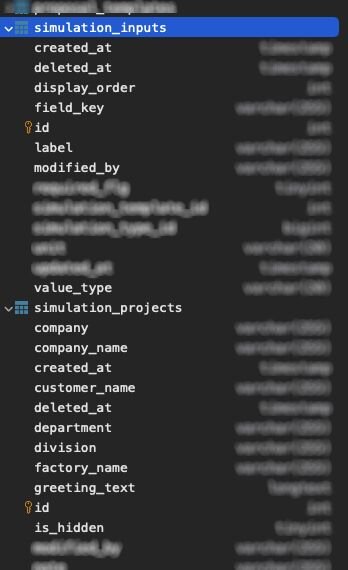
Figure 1. Database table illustrating the use of clear and descriptive naming conventions to reduce ambiguity in systems design.
Column names such as name, type, or status may seem acceptable at first, especially in smaller applications. However, as systems grow and the number of tables increases, these generic names quickly become ambiguous and harder to understand without additional context. A column named status in one table may represent something entirely different in another, forcing developers to constantly trace implementations just to understand the meaning behind the data.
More descriptive naming conventions significantly improve maintainability and readability over time. Names such as machine_status, translation_type, or customer_display_name immediately provide clearer context and reduce unnecessary guesswork during development. The same principle applies not only to columns, but also to foreign keys, timestamps, pivot tables, and audit-related fields where consistency becomes increasingly valuable as more developers work within the same codebase.
Good naming conventions do more than improve readability. They reduce cognitive overhead across the entire engineering team, making systems easier to navigate, maintain, and scale. As projects grow larger and more complex, consistency gradually becomes one of the most valuable aspects of long-term maintainability.
Proactive Indexing vs. Reactive Optimization
One of the most underrated aspects of database design is indexing. During the early stages of development, most queries appear to perform well because the dataset is still relatively small. Applications often work smoothly with hundreds or even thousands of rows, which can create the impression that performance concerns are still far away. However, production systems rarely remain small for long.
As applications grow, database operations gradually become more demanding. Table joins take longer to execute, filtering becomes more expensive, reporting queries become increasingly difficult to optimize, and APIs eventually begin experiencing performance degradation or timeouts. In many cases, these issues are not caused by the application layer itself, but by database structures that were not designed with long-term scale in mind.
Because of this, indexes should never be treated as merely an optional optimization added later in development. They are part of database design itself. Understanding how indexes behave, how query patterns evolve, how composite indexes work, and how indexing affects both read and write performance becomes extremely important for backend engineers building systems expected to scale over time.
A well-designed indexing strategy can dramatically improve performance, while a poorly planned schema slowly degrades system efficiency as data continues to grow.
A real-world project highlighting this importance was an enterprise Television Commercial Message-related system in Japan that had been handled primarily from the backend side. Even after more than five years in production, the application continues to perform reliably despite managing millions upon millions of records. What made the project particularly impressive was that its long-term stability did not rely on repeatedly applying temporary performance fixes over the years. Instead, the system remained stable because the database foundation had already been planned carefully from the very beginning.
The project itself was built long before AI-assisted development became common in modern workflows. Because of this, the system became a strong example of how solid engineering fundamentals can have a lasting impact on long-term application performance, especially in database structure and scalability planning.
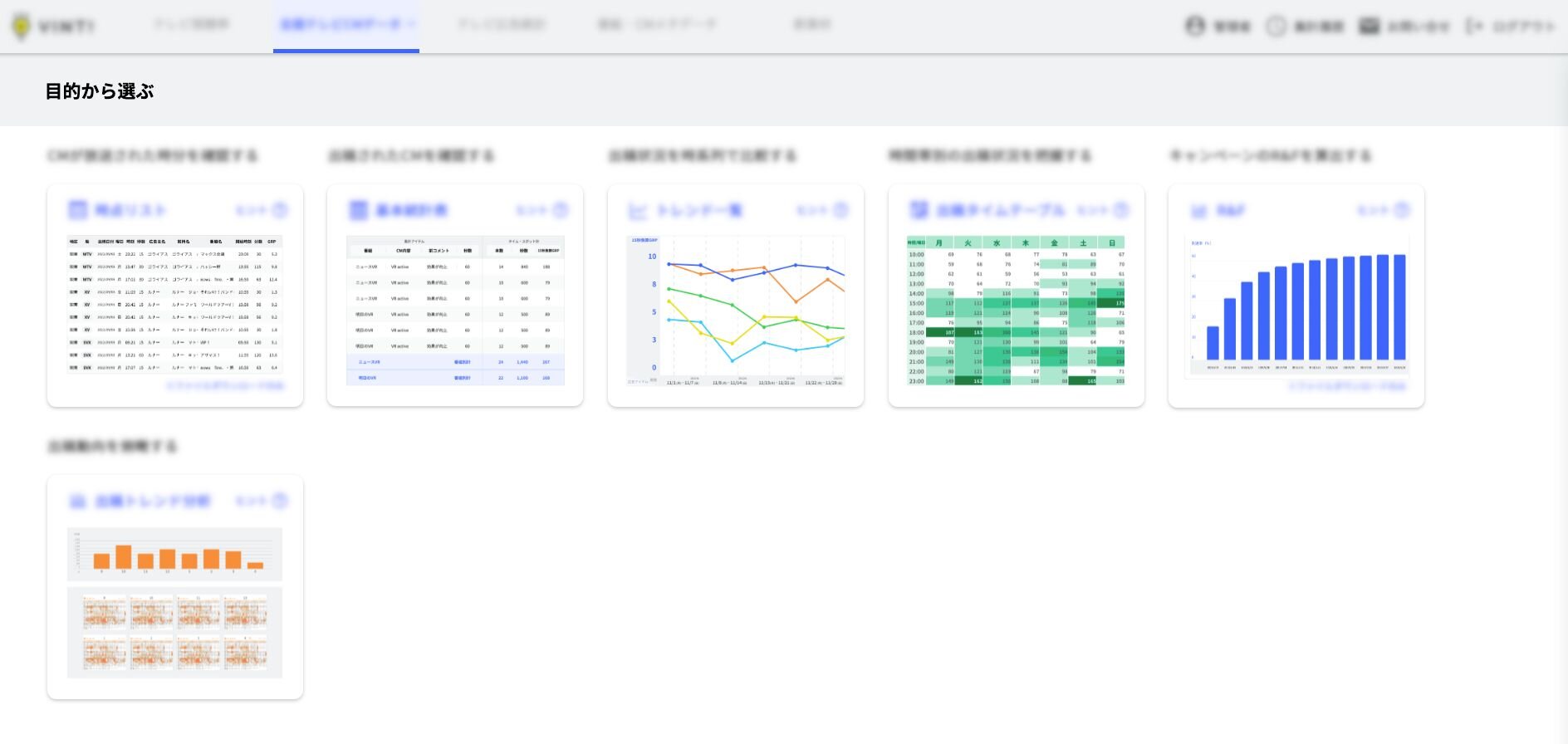
Figure 2. Home screen displaying different visualization templates for presenting millions of Television Commercial Message records in a readable manner.
The database architecture was designed around predictable query behavior, proper table relationships, normalized structures, scalable filtering logic, and consistent naming conventions. Indexes were not added reactively only after problems appeared in production. They were planned intentionally based on how the application would retrieve, filter, sort, and process data throughout its lifecycle.
Columns frequently used for filtering were indexed properly, relationships involved in joins were optimized carefully, and composite indexes were created for common query combinations used heavily across the application. Even reporting-related queries were considered early during the database planning stage rather than being treated as secondary concerns later on.
As the dataset continuously expanded throughout the years, the system remained performant because the database had already been designed with scalability in mind from the start.
Experiences like this demonstrate how good database design often remains invisible to users, yet its impact becomes increasingly obvious over time. When a system continues performing efficiently after several years and millions of records, that level of stability is rarely accidental. More often, it is the result of careful engineering decisions made early in the project lifecycle.
Backend Engineering Is More Than Generating CRUD
In the AI era, generating CRUD operations and backend boilerplate has become easier than ever. Tasks that once required repetitive manual implementation can now be completed within minutes using AI-assisted tools such as Cursor, GitHub Copilot, ChatGPT, and Claude, allowing development teams to move significantly faster during the early stages of a project.
However, despite these advancements, backend engineering remains deeply valuable because building reliable systems still requires far more than simply generating working code. Strong applications depend on proper data modeling, consistency across the system, scalability planning, performance awareness, maintainability, and sound architectural judgment; areas that still require human engineering experience and long-term thinking.
AI can assist greatly with implementation, but important technical decisions still rely heavily on engineers who understand how systems evolve over time. This becomes especially critical in database structure and planning, where early design decisions can directly influence the scalability, stability, and maintainability of an application for years.
For aspiring backend engineers, spending time learning database fundamentals seriously remains one of the most valuable long-term investments in software engineering. Modern frameworks and ORMs make development faster and more convenient, but relying solely on abstractions without understanding how databases actually work often becomes a limitation as systems grow more complex.
A strong backend foundation requires more than knowing how to create models or generate migrations automatically. It involves developing a deeper understanding of:
- Structure Query Language(SQL) optimization
- Indexing strategies and composite keys
- Query optimization and execution plans
- Normalization and database relationship design
- Transactional consistency and migration plan
These concepts become increasingly important when applications begin handling larger datasets, more complex business logic, and higher traffic workloads.
Equally important is developing good engineering habits around database design. Database schemas should be reviewed carefully, temporary shortcuts should be avoided whenever possible, and long-term maintainability should always be considered during implementation. While AI-generated database structures can accelerate development, they should never be accepted blindly without proper engineering evaluation and context.
At the center of most backend systems is the database itself. APIs, reporting, analytics, integrations, authentication, and business workflows eventually depend on how well the underlying data structure was designed. Because of this, strong database fundamentals continue to be one of the most important skills in backend engineering, even in an era increasingly shaped by AI-assisted development.
Final Thoughts
Most users will never see a database schema. They will never know how tables were structured, how indexes were planned, or how much engineering effort went into maintaining clean relationships, scalable queries, and consistent naming conventions behind the application.
From the user’s perspective, the focus is usually on features and overall experience.
However, nearly every feature, API, report, integration, and performance-related issue within a system is ultimately influenced by those underlying database decisions.
AI is continuously changing how modern software is built, making development faster and more accessible than ever before. Yet despite these advancements, strong engineering judgment remains irreplaceable. Database design, in particular, continues to be one of the most critical and often most invisible aspects of building scalable, maintainable, and reliable systems over time.
—
At Monstarlab Philippines, we recognize that sustaining high-performing digital applications in the AI era requires a strict dedication to foundational tech architectures. Our team of engineering specialists provides enterprise-grade backend systems design, scalable database modeling, and comprehensive cloud-native solutions designed to grow with your business enterprise. Whether you are modernizing legacy database setups or engineering a new platform from the ground up, we integrate AI efficiency with human architectural foresight.
Connect with our team today via our Contact Page.
—
Author: Jimmy Macaraeg, Full-Stack Developer at Monstarlab Philippines
—
References: