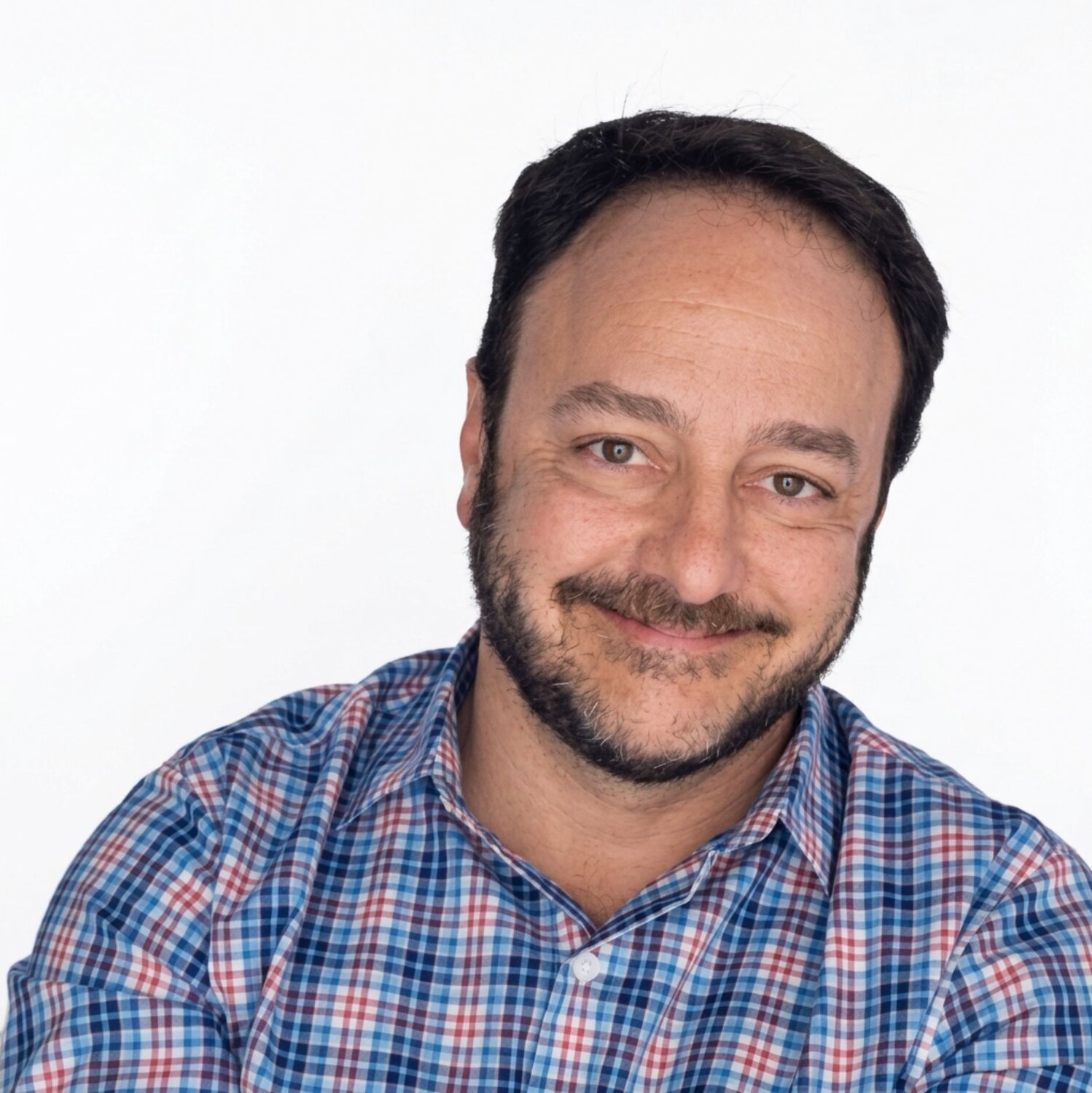
Monstarlab Americas is proud to introduce Todd Chandler, our Director of Program Management. Todd oversees client programs that we run, from initial scoping conversations through launch and beyond. He owns the plan, the risks, the budget, and the team, and he's the one making sure the people on both sides of an engagement are aligned on what "success" means and how we'll get there.
Todd has spent more than 25 years running complex technology programs at Time Inc., Indeed, Disney, Priceline, Scholastic, and Consumer Reports. He is a certified Prosci Change Management Practitioner and Scrum Master, and he holds an Accelerated Management Certificate from Yale. We asked him about deadlines, payments, AI, and the early conversations that keep programs on track.
What brought you to Monstarlab, and what does your role look like day to day?
I've spent most of my career inside big organizations, building the delivery engine for someone else's products. What drew me to Monstarlab was the chance to do that for many clients at once, with a team that cares about its craft and a culture that is unmatched in my experience.
Day to day, my job is making sure our clients' programs land: on time, on budget, and with results that make them want to work with us again. That means early conversations with clients about scope and risk, regular check-ins with the delivery leads in our Project Management Office (PMO) and our engineering team, and stepping in early when a timeline or a relationship needs attention. I also spend time making our delivery leaner, automating routine reporting so our project managers spend their hours on our clients' problems instead of paperwork.
Walk us through your background. What shaped how you run delivery today?
I spent over 15 years at Time Inc., eventually as VP of Brand Engineering, leading 80+ engineers across 26 brands like People, Sports Illustrated, and TIME. Media teaches you that deadlines are real. Once a date has been printed in a million magazines, it can't change, so you learn to plan backward from it and protect it.
At Indeed, I led a PMO and launched the company's first enterprise-wide Position Management program, which touched more than 14,000 employees. That one taught me that the hard part of a big program is rarely the technology. It's getting multiple product groups to agree on what "done" means, and to accept that they aren't the only fish in the bowl.
I'm also a certified change management practitioner and an executive coach. Both remind me that every project plan is really a people plan. The team's confidence and trust matter more than the Gantt chart, which will change the moment you share it.
A lot of our work is in payments. What does a well-run payments engagement look like, and what separates it from one that goes sideways?
Payments work is unforgiving. Money has to land in the right account every time, and compliance, onboarding, and payout rules don't flex because your launch date is close. In most software, close enough gets you to launch. In payments, close enough doesn't exist.
A well-run engagement surfaces the hard stuff in week one, not week eight. We map the money flows end to end, agree on who owns KYC, disputes, and reconciliation, and get a real test account moving early so we're testing against reality instead of assumptions. Then we keep a short, honest risk list that the client sees every week.
When a project goes sideways, the root cause is usually the same: a decision nobody wanted to make early, like how to migrate existing connected accounts or what happens to in-flight payouts at cutover. That decision sits quietly until it becomes the critical path. My job is to drag those decisions forward while there's still time to make them well.
What do clients most often underestimate at kickoff?
Their own team's time. Clients plan carefully for our capacity, but it's easy to underestimate how much of their people a program needs: product owners making decisions, finance and legal signing off, ops teams ready to run the thing once it ships. Those are the people who keep a program moving, and their availability matters as much as how fast we build.
So we plan for it from day one. At kickoff we name the decision-makers, put a regular decision cadence on the calendar, and agree on how quickly questions get answered. Thirty minutes of that in week one beats a recovery plan in month three.
How is AI changing the way your teams plan and deliver, and where is it overhyped?
It's taken a lot of the busywork off our plates. Meeting notes, status drafts, first-pass test cases, and digging through a client's documentation all happen much faster now. That gives our PMs more time for the part that matters: talking to people and making decisions.
Where it's overhyped is the idea that AI can replace judgment. It can draft a plan, but it can't tell you that a client's VP is quietly unconvinced, or that a "small" scope change is about to blow up your payout logic. In delivery the bottleneck has always been alignment, and AI doesn't fix that for you.
With so many engagements running at once, how do you keep each one on track?
Every project manager brings their own judgment to how they lead, and I want that. But nobody should be reinventing a budget report (for example), so how we report on projects, their statuses, resources, budgets, and all of the details is aligned across every engagement. We've built our own delivery tooling at Monstarlab, so everything sits in one place. For clients, that means issues get spotted and escalated early, and our leadership team always knows how their program is performing
What kinds of projects or clients get you most excited?
The ones where the vision is clear but the path isn't. I love walking into a situation where a client knows exactly where they want to be and has no idea how to get there, then building the plan, the team, and the rhythm that gets them across the line. That's where I reflect on my experience from the early days of lean product development and agile. Give me a goal, and let's build, measure, learn – and figure out the solution together.
I'm also drawn to clients who treat us as partners rather than vendors. When a client is willing to make decisions with us, tell us hard truths, and hear them back, that's when the best work happens.
Outside of work, what keeps you busy?
Family first. My wife and I have four adult kids, so there's always something going on. I'm usually out walking our chocolate lab, trying to break that elusive 90 in golf, or experimenting with a new sourdough flavor. I also do some executive coaching on the side, mostly with capable people working through career challenges and opportunities, which keeps me sharp as a leader here too.
Every year I travel to West Virginia with my church to help lead projects with the Appalachia Service Project. Our teams of teens and adults repair homes across the region to make them "warmer, safer, and drier." It's a real honor, and it's my annual recharge for so many reasons.
And I should mention Mishelly, our tortoise, who is the calmest member of the household by a wide margin.
If you're planning a payments build, a platform migration, or an ambitious launch you want to get right the first time, Todd and our delivery team would love to hear about it. Use the contact form below to start the conversation.